A Simple Blog Post Template That Doesn’t Sound Like AI (Copy/Paste, 2026)

Cover photo: Pexels by Mikhail Nilov.
A Simple Blog Post Template That Doesn’t Sound Like AI (Copy/Paste, 2026)
AI can help you draft faster, but many posts still feel generic: too smooth, too safe, and full of phrases no human would actually say.
If you’re a normal creator, freelancer, or small business owner, this guide gives you a practical structure you can reuse today—without sounding robotic.
If your bigger goal is not just writing faster but publishing more consistently, pair this with a 7-day AI content repurposing workflow so one useful post turns into multiple assets instead of one-off drafts.
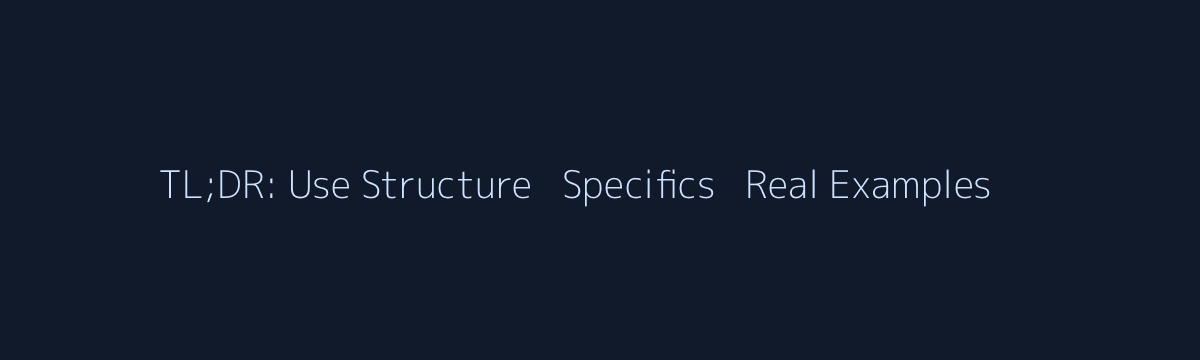
TL;DR
- Use a fixed structure: Hook → Problem → Steps → Example → FAQ → Summary.
- Add specifics: numbers, constraints, mistakes, and trade-offs.
- Edit for voice: shorter sentences, plain language, direct opinions.
- Don’t trust AI detectors as your quality check—they are still unreliable.
- Goal: useful writing, not “perfect AI-looking writing.”
+The+Template+You+Can+Copy+Right+Now)
1) The copy/paste template
Use this in your draft doc before you ask AI for help:
Title: [Clear outcome for one reader type]
Audience: [Beginners / busy professionals / parents / students]
Main promise: [What changes after reading this]
Hook (2–3 lines): [Real frustration or common mistake]
Why this matters now: [One current trend in 2026 + why reader should care]
Step-by-step section (3–5 steps): [Action verbs only]
One realistic example: [Before → After]
What can go wrong: [Top 3 mistakes + quick fix]
FAQ: [3 common questions]
Final summary: [One sentence + one next action]
This is simple on purpose. A stable structure removes 80% of the “AI fluff” problem because you force the draft to stay practical.
+How+to+Prompt+AI+Without+Getting+Generic+Text)
2) Prompt format that produces human-sounding drafts
Most weak outputs come from weak constraints. Try this prompt pattern:
Write a practical blog post for [audience] on [topic]. Use plain English and short paragraphs. Avoid hype and avoid “as an AI” style phrases. Include one opinionated recommendation and one trade-off per major section. Use this structure exactly: Hook, Why it matters now, 4 steps, Example, Mistakes, FAQ, Summary.
Then add your own details before publishing:
- One real number (time saved, budget range, or checklist length)
- One constraint (“works with 30 minutes/day”)
- One honest downside
Those three details instantly make writing feel more human and less templated.
+2026+Trend+Snapshot%3A+Quality+%3E+AI+Label)
3) Why this matters in 2026 (trend snapshot)
Two trend signals are clear right now:
- Search guidance continues to focus on helpful, people-first content rather than “AI vs non-AI” labels.
- “AI detector score” is still a weak quality metric, with reliability and bias concerns.
So the practical strategy is simple: write for usefulness, not for passing detector tools.
+Fast+Editing+Checklist+Before+Publishing)
4) 7-point edit checklist (5 minutes)
- Delete one vague paragraph and replace it with one concrete example.
- Replace passive voice in your headings with action verbs.
- Cut every sentence longer than ~24 words unless necessary.
- Add one “this may not work if…” limitation.
- Check if your first paragraph says who this is for.
- Check if your last paragraph gives one clear next step.
- Read the post out loud once. If it sounds scripted, rewrite that part.
When this template works best
This structure works best for beginner-friendly, problem-solving posts where the reader wants one useful answer quickly. It works less well for broad comparisons, trend roundups, or vague “top tools” articles because those often drift back into generic AI-sounding writing.
If you want better indexing odds, use this template for one clear reader problem at a time instead of trying to cover five different search intents in one post.
Further reading
- Google Search’s guidance about AI-generated content
- Top ways content performs in Google’s AI search experiences
- Stanford HAI: AI detectors can be biased against non-native English writers
FAQ
Do I need to avoid AI tools completely?
No. Use AI for drafting, then apply human constraints and editing.
What makes text sound robotic most often?
Vague claims, no examples, and no real trade-offs.
What is the fastest improvement?
Use a fixed template and force one concrete example in every major section.
Bottom line: people do not care if AI helped you draft. They care whether your post is useful, specific, and honest.


Comments
Post a Comment